

Last Updated: November 10, 2026
Quick Summary
A plus size fishing shirt fits well when it sits comfortably across your chest and hips without pulling, gaping or bunching, and lets you cast, reel and lift your arms freely. Test the fit with movement, not just by standing still. Measure your bust, hips and torso, then compare them with the brand's garment measurements.
- Measure your chest, hips and torso in centimetres with a soft tape before buying.
- Double the flat chest measurement and compare it with your bust measurement.
- Aim for at least 5 cm of chest ease if your bust falls between two sizes.
- Raise your arms and mime a cast to check the shirt rides up or pulls at the seams.
- Check the sleeve length at your wrist with your arms extended.
Table of Contents
- What a Good Plus Size Fishing Shirt Fit Looks Like
- How to Measure for a Fishing Shirt Before You Buy
- Reading a Plus Size Fishing Shirt Size Guide Correctly
- Fishing Shirt Fit for Women: Chest, Hips and Torso Ease
- Loose Fit Fishing Shirts: When Relaxed Cuts Help and When They Don't
- Shoulder, Sleeve and Shirt Length Checks for Movement
- Your Try-On Checklist Before Your First Trip on the Water
- Frequently Asked Questions
What a Good Plus Size Fishing Shirt Fit Looks Like
A good plus size fishing shirt should sit comfortably across your chest and hips without pulling, gaping or bunching.
Here's the thing most people miss. A shirt can look fine standing still and still fail the moment you start casting.
Watch out: if the chest button pulls into an X shape when you sit down, the shirt is too tight there, even if it zips up.
How to Measure for a Fishing Shirt Before You Buy
Measuring yourself takes about five minutes and saves you from guessing. Use a soft tape measure, wear a fitted top or nothing over the bust area, and keep the tape level all the way round. Stand relaxed with your feet together, and don't pull the tape tight.
Taking Your Chest, Hip and Torso Measurements
Take three core measurements:
- Chest: Measure around the fullest part of your bust, keeping the tape flat under your arms.
- Hips: Measure around the widest part of your hips and seat.
- Torso length: Measure from the base of your neck at the back down to your natural waistline.
Write each number down in centimetres. Keep your numbers in centimetres so they match the size chart.
Comparing Your Measurements With the Garment Measurements
Your body measurements are only half the story. Garment measurements are the flat measurements of the shirt itself, taken across the chest with the shirt laid flat. Many brands list the flat measurement, which is roughly half the full circumference.
Chest ease is the gap between your body and the shirt. A little ease gives you room to move. Too much and the shirt looks boxy. Too little and it pulls.
Reading a Plus Size Fishing Shirt Size Guide Correctly
A plus size fishing shirt size guide is only useful if you read it the right way. Start with your chest measurement, since it's usually the hardest area to fit. If your chest falls between two sizes, look at your hip and torso measurements before deciding.
Check whether the guide lists body measurements or garment measurements. If it lists garment measurements, compare them with your own body numbers plus the ease you want.
Here's a quick summary of what to check on any size guide:
| Measurement | What to Compare | Why It Matters |
|---|---|---|
| Chest (flat) | Double it, then compare with your bust | Controls ease through the bust |
| Hip | Your widest hip point | Stops the hem pulling up |
| Torso length | Neck to waist | Keeps the shirt long enough to tuck or stay put |
| Sleeve length | Shoulder to wrist | Covers your arms while casting |
A Decision Rule for Between-Size Shoppers
Most size-chart advice stops at 'size up if unsure'. That is too blunt for a plus-size fishing shirt, where the chest, stomach and hips can each point to a different size. Use this order of priority instead:
- Chest first. If your bust measurement sits between two sizes, choose the size whose flat chest measurement, doubled, gives you at least 5 cm of ease over your bust. Less than that and the buttons will pull when you cast or sit.
- Stomach second. If your stomach is your fullest point, check the garment's waist measurement if the brand lists one. A shirt that fits the chest but has no room through the stomach will ride up when you bend. In that case, take the larger size and accept a little extra room at the chest.
- Hips third. If your hips are wider than your chest, check the hem width. A hem that is narrower than your hip measurement will pull up every time you raise your arms. Choose a cut with a straight or slightly flared hem rather than a tapered one.
- Layering last. If you plan to wear a base layer or a hoodie underneath in cooler months, add one size to whatever the first three steps give you. If you fish in a single layer in heat, stay with the measured size.
A common pattern is that plus-size shoppers who are fuller through the stomach do better sizing up, while those who are fuller through the bust and narrower through the waist do better staying with the measured size and choosing a shaped cut.
Watch out: if the size guide lists only body measurements and no garment measurements, you cannot calculate ease directly.
Fishing Shirt Fit for Women: Chest, Hips and Torso Ease
Women's fishing shirts need extra attention at the chest, hips and torso. You can see this shirt's cut and sizing on the All-Day Angler Shirt page. The bust area needs enough room that buttons don't gape.

Many women find the hardest part is balancing these three areas. A shirt that fits the bust well may be too tight at the hips, and a shirt that fits the hips may hang too loose at the chest. Look for cuts that are shaped through the body rather than straight up and down.
Watch out: a shirt with a straight, boxy cut can add bulk around the waist, even when the chest fits. Look for a shaped waist or an easy taper.
Loose Fit Fishing Shirts: When Relaxed Cuts Help and When They Don't
A relaxed or loose fit can be a good choice for hot days on the water. It gives air flow and room to move.
Relaxed cuts work well if you layer underneath, or if you want the shirt to sit away from your skin in heat.
The Signature Series Shirt is one option to compare fit profiles with: see the Signature Series Shirt before deciding between relaxed and fitted cuts.

Shoulder, Sleeve and Shirt Length Checks for Movement
Before you buy, check the shoulder seam. It should sit at the edge of your shoulder, not slip down your arm or pull up toward your neck.
Shirt length matters too. Check that the hem covers your hips when you raise your arms.
Test the movement yourself: raise both arms, reach forward and twist side to side. If the shirt pulls across the back or under the arms, size up or choose a cut with more room in those areas.
Plus-Size-Specific Checks Most Guides Skip
A standard shoulder-and-sleeve check assumes a straight frame. On a curvy body, the places that fail first are different, and they are worth checking deliberately:
- Armhole depth. A shallow armhole cuts into the upper arm and armpit when you cast. Put the shirt on and raise your arm to shoulder height. If the fabric digs in under the arm, the armhole is too high or too small, regardless of the chest size.
- Sleeve width. A sleeve that fits the wrist can still be tight around the upper arm. Check that you can slide two fingers under the sleeve at its widest point without the fabric straining. If you cannot, the sleeve will restrict your cast.
- Back width. Reach forward as if you are holding a rod. If the shirt pulls tight across the shoulder blades, the back panel is too narrow. This is common in shirts cut for a straighter frame.
- Hem behaviour on the hip. Raise both arms overhead and look at the hem. If it lifts above your waistband, the shirt is too short or the hem is too narrow for your hips. A hem that sits at mid-hip or lower, with a straight cut, stays put more reliably.
- Seam placement over the bust. Check that no horizontal seam runs across the fullest part of your bust. A seam there will pull and chafe when you move.
A Movement Test You Can Do in the Change Room
Stand in front of a mirror and run through these four movements in order. Each one tests a different part of the fit:
- The overhead reach. Raise both arms straight up. The hem should stay below your waistband and the sleeves should not pull at the shoulder seam.
- The cast mime. Bring your dominant arm back and forward as if casting a lure. The shirt should not twist around your torso or bind under the arm.
- The forward bend. Bend at the waist as if reaching for a tackle box. The back should not pull tight and the hem should stay over your hips.
- The seated reel. Sit down and mime reeling with both hands. Check that the chest does not gape and the stomach does not strain the buttons.
If any movement fails, the shirt is not the right fit for fishing, even if it looks fine standing still. Fabric stretch and construction also affect fit, so a shirt with some give may feel better in motion than a stiff one that looks fine on the hanger.
Watch out: don't rely on a single fit test. Movement, sitting, and bending show problems that standing still hides.
Your Try-On Checklist Before Your First Trip on the Water
Try the shirt on before your trip, and move in it the way you would on the boat. Use this checklist:
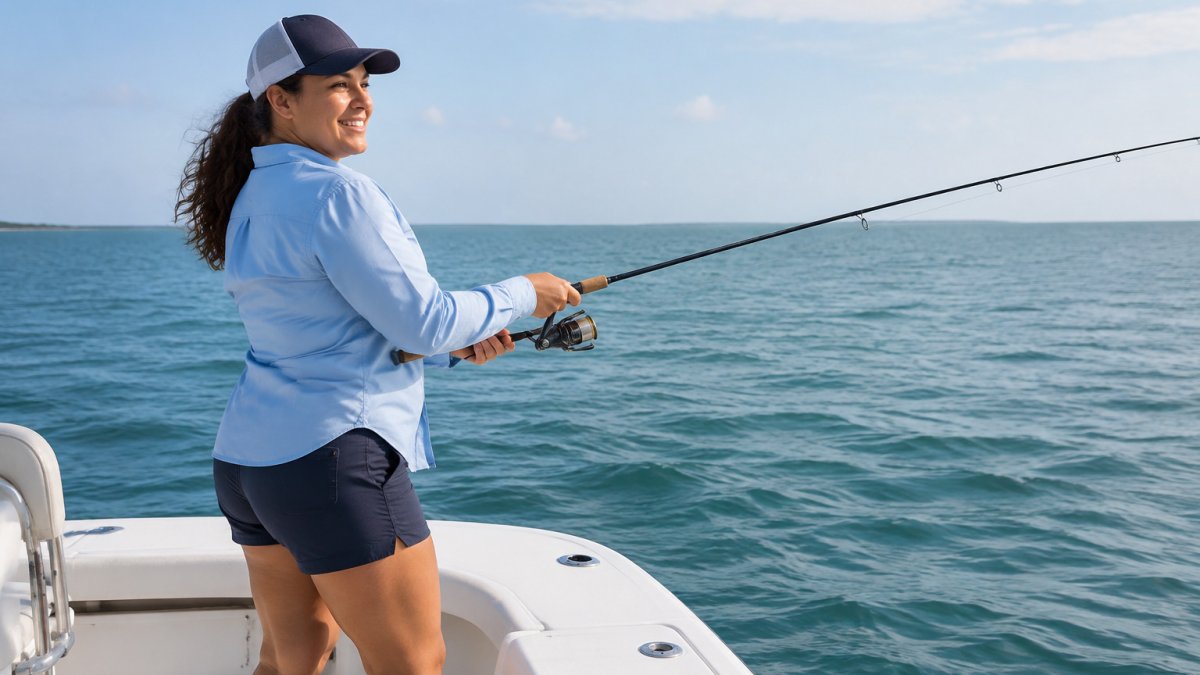
- Button the chest. Does it pull or gape when you sit down?
- Raise your arms overhead. Does the shirt ride up at the waist?
- Mime a cast. Do the shoulders and sleeves stay comfortable?
- Reach forward and bend. Does the hem stay covering your hips?
- Check the sleeve length at your wrist with your arms extended.
- Sit down and stand up. Does the fabric bunch under the arms?
- Stand in front of a mirror in natural light. Does the fit look balanced?
If any item fails, try a different size or cut before you go.
Watch out: don't rely on a single fit test. Movement, sitting, and bending show problems that standing still hides.
Getting the fit right comes down to measuring your body, reading the garment numbers, and testing the shirt in motion.
FAQ
Should I size up for a fishing shirt? Sizing up can help if you want room to cast and layer.
Frequently Asked Questions
Should a fishing shirt fit tight or loose?
A fishing shirt should sit close to the body at the shoulders and sleeves while leaving enough room through the chest and torso to move freely. Fabric should skim rather than cling, and it should not pull or gape at the buttons or hem. A relaxed fit suits most casting and reeling, but if the shirt bunches under the arms or rides up when you lift your arms, the cut is too narrow for you.
How do I choose the right size fishing shirt?
Start with your chest or bust measurement and compare it with the garment's flat chest measurement on the size chart, not the label size. Then check the shoulder width and shirt length. If your measurements fall between two sizes, choose the larger size for a relaxed fit or the smaller one if you prefer a closer cut and the fabric has stretch. Always confirm the return policy before buying.
How should the shoulders and sleeves of a fishing shirt fit?
The shoulder seam should sit at the edge of your shoulder without dropping down your arm. Sleeves should reach your wrist bone or just past it, and the armhole should allow full arm movement without tightness. Test by raising both arms overhead and making a casting motion. If the shoulder seam pulls forward or the sleeve tightens under the arm, consider sizing up.
How much room should a fishing shirt have through the body?
Look for enough ease that the shirt does not cling when you bend, reach or sit. Measure the flat chest width on the garment and compare it with your body measurement. A few centimetres of extra room across the chest and torso usually gives comfortable movement without the boxy look. Pay attention to the hips, where a shirt that is too short or too tight will ride up during reeling.
